 WeChat



productcenter
PRODUCTS
Technology has enabled us, and I create value for our customers





 Your location:
Home
Your location:
Home
 Product Details Page
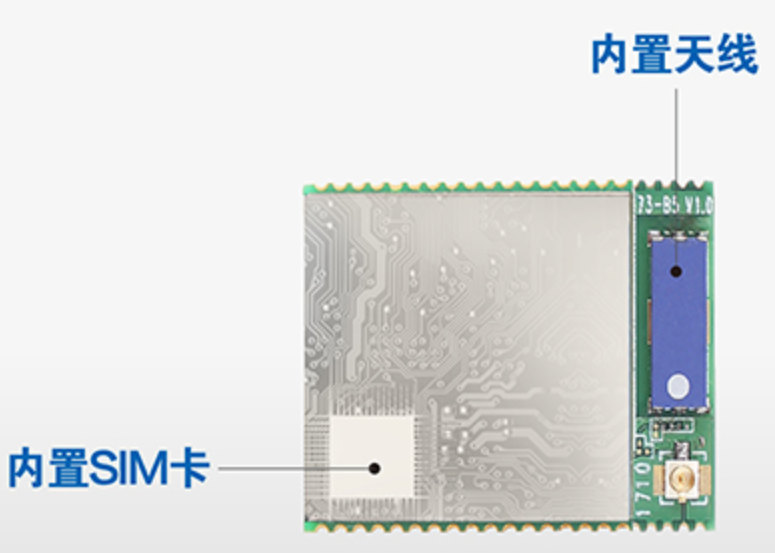
NB-IOT wireless communication module
The main function of NB IoT modules is to connect IoT devices. It can provide low-power, low-cost, and highly reliable connections, support a large number of device connections, and can be used in urban, rural, and remote areas. In addition, NB IoT modules can also be used for applications such as remote monitoring, remote control, and data transmission.


一. NB-IoT Network Architecture The overall NB-IoT network architecture is divided into five parts: terminal, radio access network, core network (EPC), IoT support platform, and application server. II. Introduction to NB-IoT Network Architecture 1. Terminal The terminal mainly connects to the base station via the air interface. Terminals mainly include industrial terminals and NB-IoT modules. Industrial application environments are more complex, so industrial terminals differ accordingly. In addition to chips, modules, and sensor interfaces, they also include wireless transmission interfaces, soft-SIM devices, sensor interfaces, and other NB-IoT components. 2. Radio Access Network Side It supports two packet network deployment approaches: - Single-operation (single radio access network), including 2G/3G/4G and NB-IoT radio access networks. - Dedicated NB-IoT network deployment. It is mainly responsible for air interface connection management, cell management, and related functions. It connects to the IoT core network through the S1-lite interface and forwards layer-3 unconnected data to upper-layer processing entities. 3. Core Network Network components support two packet network approaches: - Integrated Evolved Packet Core (EPC) data transmission, i.e., the 2G/3G/4G core network. The core network supports NB-IoT and eMTC user access through IoT EPC network elements, as well as the common EPC shared by GSM, UTRAN, and LTE. 4. IoT Support Platform Including the Home Location Register (HLR), positioning control, and Policy and Charging Rules Function (PCRF). 5. Application Server The final aggregation point for IoT data, which can perform data processing and other operations according to customer requirements. III. Data Transmission Modes To transmit IoT data to applications, the cellular IoT (CIoT) defines two optimized schemes within the EPS: - Optimized CIoT EPS user-plane function (user-plane CIoT EPS optimization) - Optimized CIoT EPS control-plane function (control-plane function optimization) As shown in the figure above, the red line represents the optimized CIoT EPS control-plane function scheme, and the blue line represents the optimized CIoT EPS user-plane function scheme. 1. Optimized CIoT EPS Control-Plane Function Uplink data is sent from the eNB (CIoT RAN) to the MME. The transmission path is split into two branch data transmission modes: - Forwarded to the PGW via the SGW, then to the application server. - Connected to the application server via the Service Capability Exposure Function (SCEF) (only for non-IP data transmission; the downlink data transmission path is the same but in the reverse direction).
Notes:
-MME (Mobility Management Entity)**: A key control node for accessing the network (signaling entity). Responsible for UE tracking and paging control in idle mode. Completes user authentication through information exchange with the Home Subscriber Server (HSS).
-SGW (Serving Gateway)**: Responsible for routing and forwarding user data packets. For UEs in idle state, the SGW acts as the end-point of the downlink data path and triggers UE paging when downlink data arrives.
-PGW (Packet Data Network Gateway)**: Acts as the interface and forwarding point between the UE and external packet data networks, and performs downlink service-level charging for services.
-SCEF**: A newly introduced function dedicated to NB-IoT configuration correction, controllable transmission of non-IP data packets, and providing abstract interfaces for network services such as authentication.
In this scheme, since packets can be sent over signaling radio bearers, there is no need to establish dedicated data radio bearers. Therefore, this solution is widely used in scenarios where small data packets are sent infrequently.
2. Optimized CIoT EPS User-Plane Function
The physical network data forwarding scheme is the same as in conventional data communication. Data is transmitted over radio bearers, forwarded from the SGW to the PGW, and then to the application server.
Although this method incurs connection setup overhead, it supports fast sequential packet transmission. It supports both IP and non-IP data transmission.
Product Center
Solution Center
Demo development board
Beidou Tourist Card
Beidou intercom solution
Beidou/4G Lifeguard Bracelet
G-mouse navigation and positioning module
WiFi/BLE 2-in-1 IoT module solution
sensor
WiFi/BLE wireless connection
GD32 MCU microprocessor
© 2022 Copyright Shenzhen Weierjian Technology Development Co., Ltd 粤ICP备20033837号
Contact Us
tel:0755-83290418
phone:13602688458 (Mr. Zeng)